Be there when they decide.
Patients decide at home, long after the appointment ends. CaseClarify sends your treatment plan home as a page they actually understand — your reasoning in plain words, coverage first, a yes one tap away — and shows you what they weighed before you ever pick up the phone.
Treatment isn’t lost in the chair. It’s lost at the kitchen table.
You explain it well. Then the explanation leaves in someone’s memory of a four-minute conversation, next to a page of codes, to be retold that night to someone who wasn’t there. You never find out which part survived, what worried them, or whether it was the money or the molar. Until the front desk calls, and hears: “We’re still thinking about it.”
“Usually after an appointment I leave thinking, ‘I hope I remember everything they just told me.’” — Patient, the founding office
Fits the office you already run
Your software prints the plan. CaseClarify gets it understood.
No integration project, no IT ticket, no new steps for the doctor. The treatment plan your practice software already produces — Dentrix first, any printed plan behind it — goes home understood, and comes back to you as a conversation you can actually have.
Photograph the plan.
The Treatment Case printout Dentrix already makes, snapped with a phone or uploaded as the PDF. Every line is read into a table checked beside the original, totals verified to the cent, before anything is built.
Approve it anywhere.
The plan becomes the few things a patient actually thinks in, each treatment with its why and its honest alternatives. Nothing reaches a patient until you sign off.
It leads with the good news.
Text it, email it, or print it, from your own accounts. Every plan opens with what insurance covers, and the yes is one tap from their phone.
You see what they weighed.
Which treatments they read, whether the cost took most of their attention, whether they came back to it — and the sentence to open your call with.
Clarity
Your reasoning, at their kitchen table.
A twenty-line plan becomes the few things a person can actually hold: each treatment with why it’s recommended, its imagery, the visits it takes, and the honest alternatives, waiting included. Your own note to them sits at the center, polished but never invented. It reads in a minute, and it holds up when it’s retold to someone who wasn’t in the room.
Nothing reaches a patient until you approve it. Every dollar is printed from the plan itself — the writing never touches a number.
Thank you so much for coming in today, Maya!
The good news about cost: your insurance covers $1,109 of this plan.
Every line opens on a tap: the why, the imagery, the honest alternatives.
Still thinking it over? That’s exactly what this page is for.
Insight
Their thinking, back to you.
The page notices which parts they open and how long they stay with each. Not whether they opened it — what they were weighing. The crown or the cost. Once, or three evenings running. CaseClarify turns that into one plain sentence about where they stand, and the line to open your call with. Your front desk stops calling blind. You stop guessing.
Measured only on the patient’s own private link, never in your office. The page tells them so, in plain words, so your next conversation can start from their real questions.
Cost is the live question.
Most of their attention went to the fee, not the dentistry. They understand what you found — the conversation to have is about payment, sequencing, or what insurance covers this year.
“I want to talk about how we pay for this, not whether you need it.”
What it tells you
Not a statistic. An approach.
Every pattern of reading calls for a different conversation. CaseClarify names the pattern and hands you the opening line, in words your front desk can actually say.
Cost is the live question.
“I want to talk about how we pay for this, not whether you need it.”Weighing the treatment, not the price.
“Tell me what you’re picturing when you think about the crown on tooth 31.”They came back to it.
“You’ve been back to it a few times. Is the crown the part you’re weighing?”Opened, barely read.
“Did the page come through all right? Some phones bury it.”When they decide
A yes is one tap. So is “not yet.”
They say yes from their phone.
It lands on your dashboard the moment they tap it, with the first visit to book and their number a tap away. A yes isn’t finished until a chair is booked, so it stays in front of you until it is.
They ask for more time.
A week, two weeks, a month: they choose. You get a date instead of silence, and the case comes back to you on that day.
They say no, clearly.
A clear no is the system working. Record why — cost, timing, not convinced — and see over time which part of the explaining to fix.
Psychology
Built on how people actually decide.
People don’t decide on information. They decide on how it feels to hold it. So the money opens with what insurance covers before what they owe, every treatment carries its own split, and the benefits deadline is stated as a fact, never a threat. Patients can tell when nothing is being sold — and that is exactly when they say yes.
- Gain firstWhat insurance covers comes before what they owe, on every plan.
- One stepOne decision at a time, and the yes is a single tap.
- Room to wait“Still thinking it over? That’s exactly what this page is for.”
- Honest pathsEvery treatment opens to its alternatives, waiting included.
- The co-deciderOne tap shares the page with whoever they decide with.
The good news about cost: your insurance covers $1,109 of this plan, bringing your portion to $3,119. Your benefits reset on December 31 — whatever’s unused doesn’t carry over.
Why patients believe it
Built to be trusted.
Trust is the conversion mechanism. The moment a patient catches one manufactured urgency, everything before it becomes a sales pitch — so the system is built so that moment cannot happen.
Nothing ships unseen.
Not one word reaches a patient until the dentist signs off — a hard gate in the software, checked on every view of every page, not a policy in a handbook.
The AI can’t write a dollar.
Every figure a patient sees — fees, coverage, the benefits date — is printed from the plan itself. A validator rejects any number the writing invents.
Honest alternatives, always.
Every treatment carries its other ways, including waiting, with real tradeoffs. Patients can tell when nothing is being sold.
Nothing kept, nothing hidden.
Uploaded plans are deleted once they’re checked. First name only. Patients are told, plainly, what their dentist can see — and an audit trail sits behind every action.
The founding office
First ten cases. Ten decisions.
Ten patients were sent home through CaseClarify. Every one of them reached a decision from their own phone: eight said yes, two said a clear, comfortable no. Nobody went silent, and nobody had to be chased.
Ten cases is ten cases. We publish what we measured, at the scale we measured it, from the office that built the product.
“I ended up showing it to my husband that night because it was so easy to understand. Instead of trying to explain what the dentist said from memory, I could just walk him through it.”
“The best part was that it felt like I was taking home my treatment plan, not just a treatment plan. It was about my situation, my options, and what made sense for me.”
Our own graphics
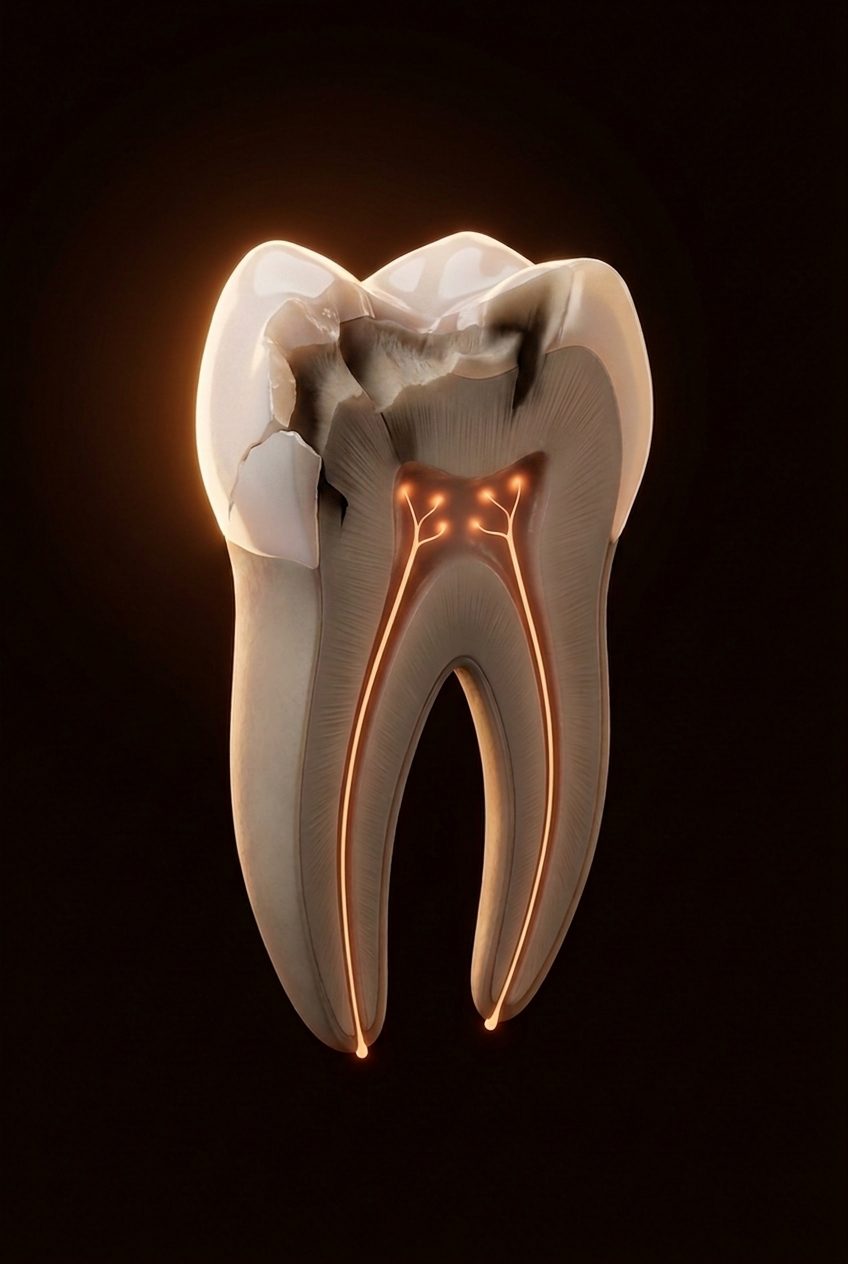
Dentistry youcan finally see.
Every treatment is illustrated from our own conceptual-CGI library — clinically accurate, one warm light on a dark field, built to explain a mechanism rather than stage a sale. Not stock video. Not a photoreal fake of the patient’s mouth.
Built chairside.
CaseClarify was built by a practicing dentist, in his own operatory, around a moment every dentist knows: the patient who nods, takes the printout, and goes quiet. It is in daily use at the founding office that made it.
Founding practices
A dozen seats. $150 a month, for life.
The first practices get the complete product at a rate that never rises while they stay, a direct line to the founder, and onboarding done personally. In exchange: de-identified outcome data and, if the results are real, a testimonial. Capped on purpose — white-glove doesn’t scale past a dozen.
Or see it on one of your own cases first. Book a demo