The graphics
Dentistry you can finally see.
Every case is illustrated with our own conceptual-CGI library — one warm light on a dark field, clinically accurate, built to explain a mechanism, never to stage a sale. This is not stock video and it is not a photoreal fake of the patient's mouth.
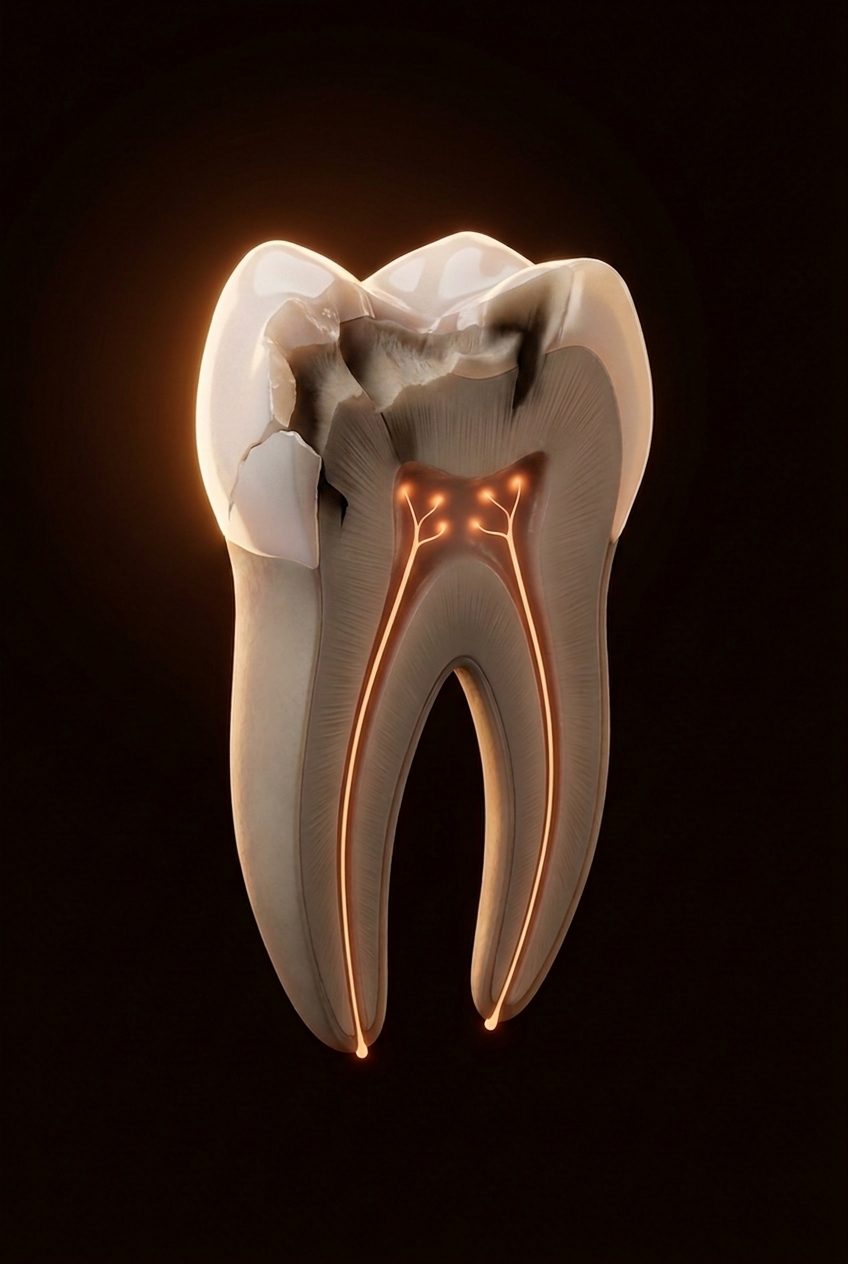
A cracked molar, rendered as a cross-section. The patient sees the crack reach toward the lit nerve — and understands the recommendation before a single number is mentioned.
Why we drew our own
Everyone else shows the destination. We show the because.
Smile-visualization tools render a prettier photo of the finished result — cosmetic only, no reasoning. Patient-education libraries play a generic stock video of "what a crown is." Neither carries the causal chain a dentist actually holds: this is cracking, therefore it spreads, which is why it needs to be wrapped. Our graphics are drawn to carry that chain — the same reasoning the page, the take-home, and the presenter all speak.
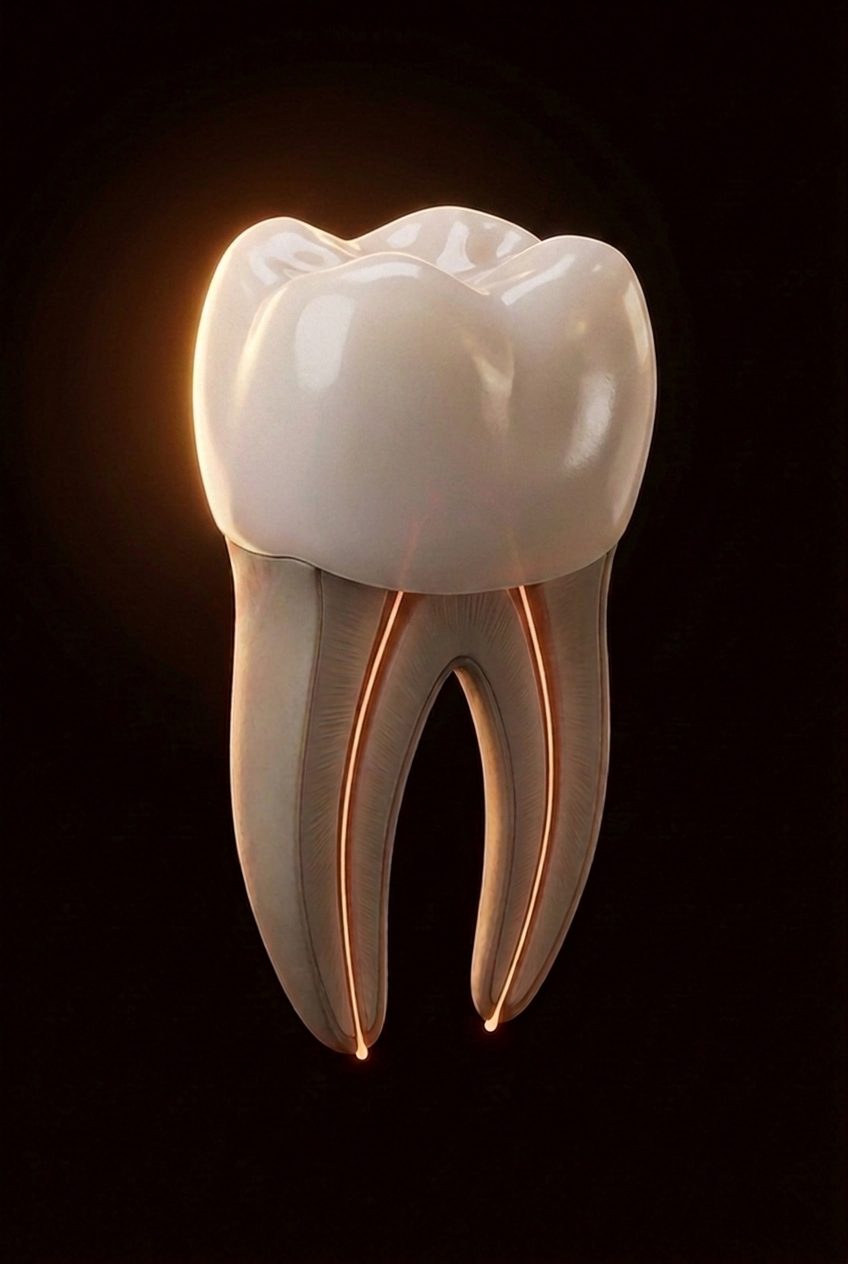 The crown, protecting the tooth
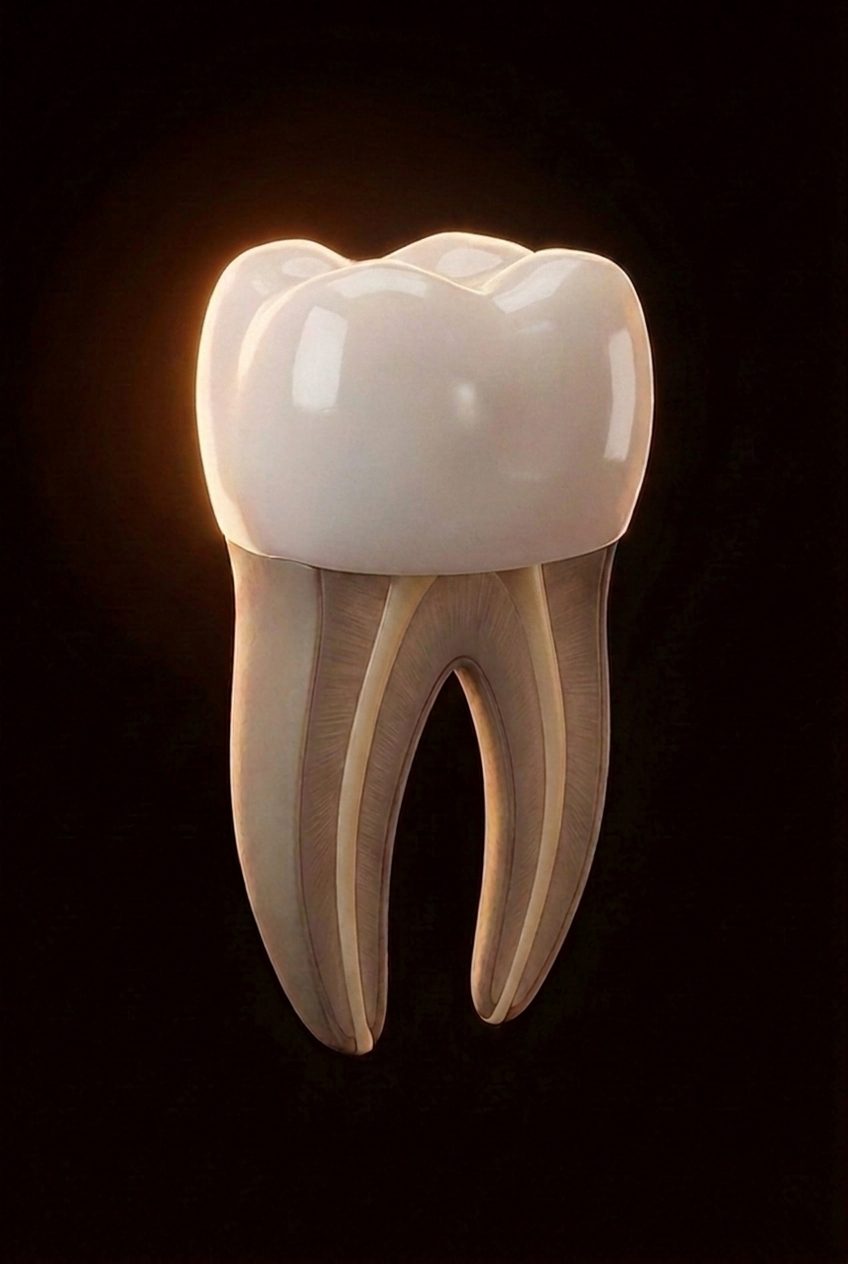 Sealed, then crowned
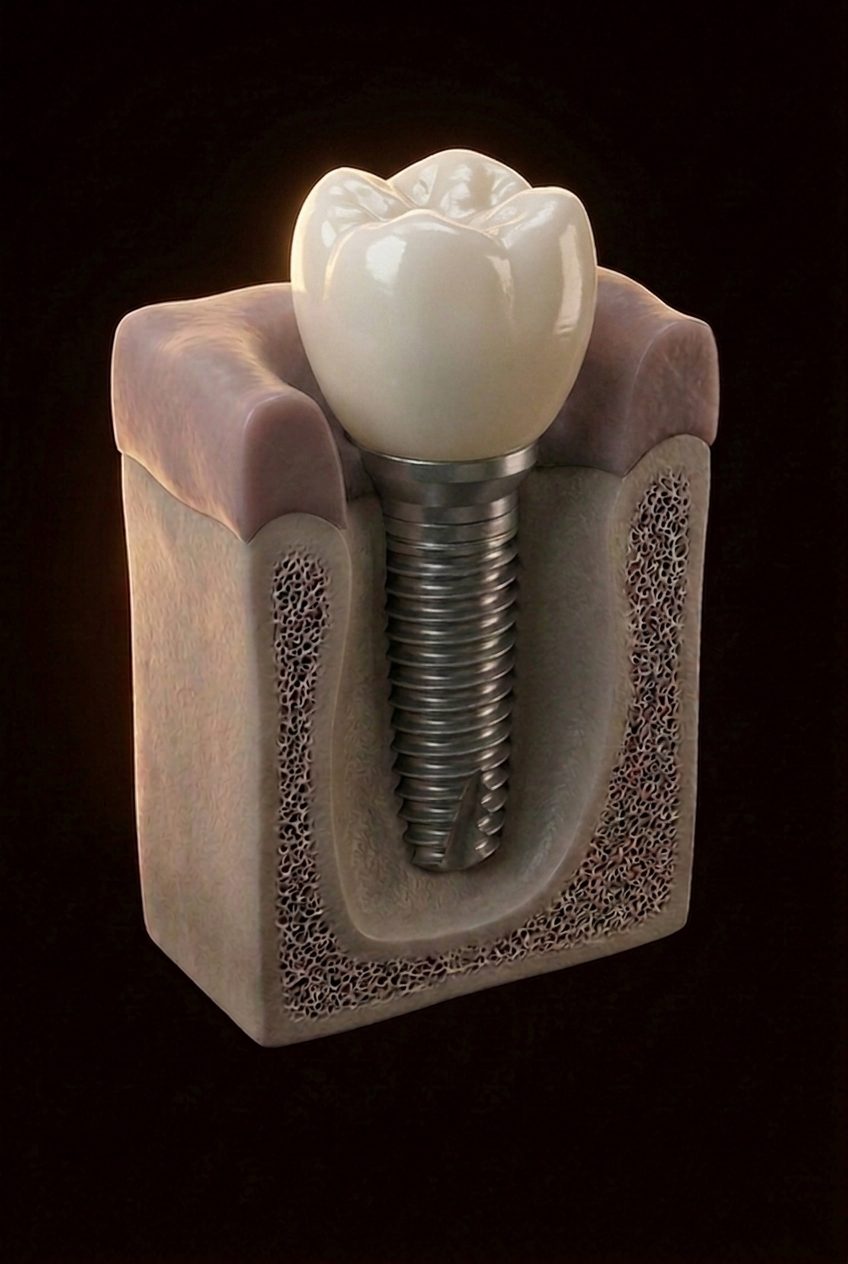 A new root, and its crown
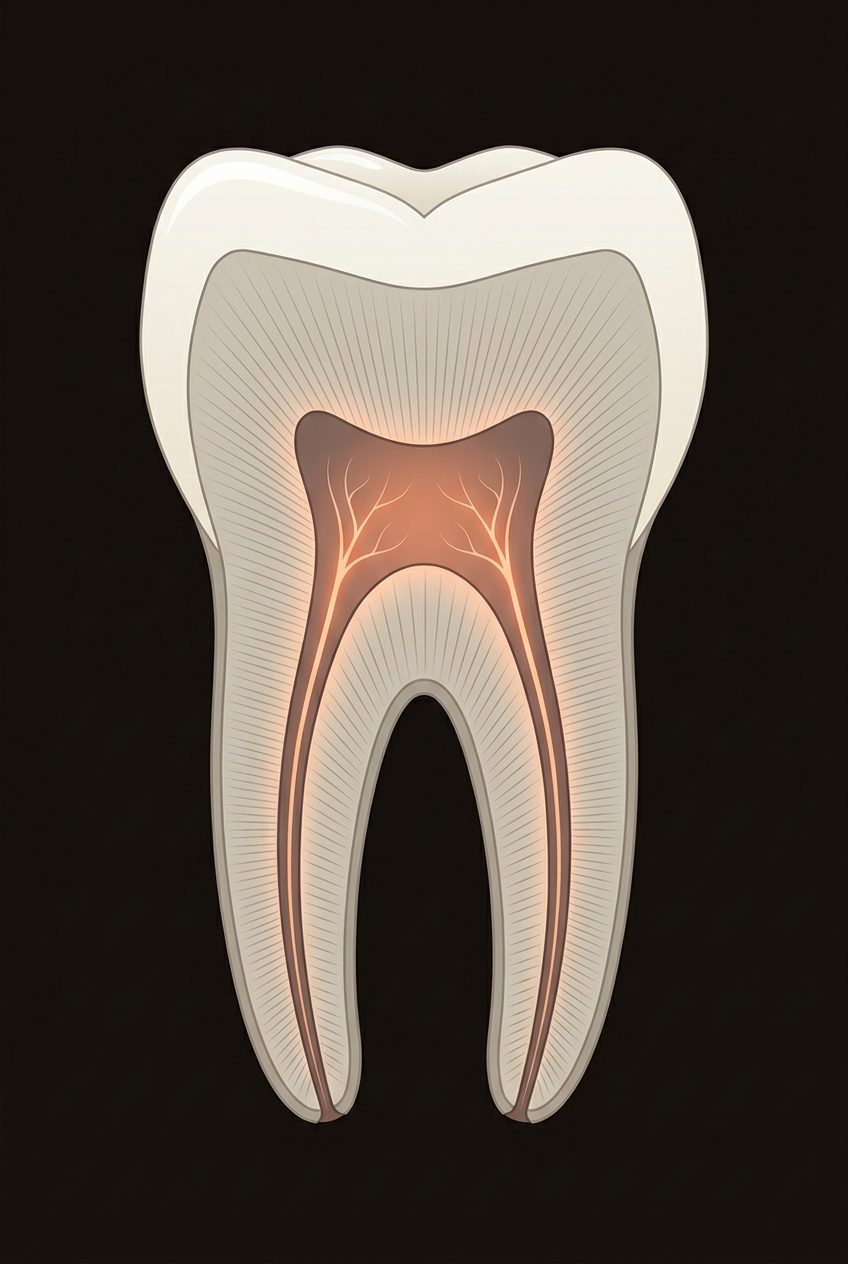 The labeled anatomy layer
Four rules the library obeys
Clinically accurate
Dentistry can't do everything, so the graphics don't pretend it can. Veneers are only ever shown on teeth with enough enamel to bond to; badly broken-down teeth are rebuilt as reconstruction, not veneered. A bridge reads as one connected span, not a floating tooth. Accuracy is the point of trust.
Doctor-selectable severity
You pick the version that matches the patient in your chair. Mild staining or heavy staining; a small chip or an advanced case — the presentation shows the one that's true for this person, chosen by the dentist, never exaggerated to alarm.
Marked by code, in the room
The exact tooth is lit on a clean arch plate — a glow and a number placed by software at presentation time, so one honest library serves every case. The arch is never pre-marked; the light only appears when it's this patient's tooth.
An honest estimate, never a promise
Cosmetic simulations always say so. Every simulated smile carries the line: a digital estimate of direction, not a guarantee of the exact result. We would rather set an honest expectation than win a case on a picture we can't deliver.
Honest, not photoreal
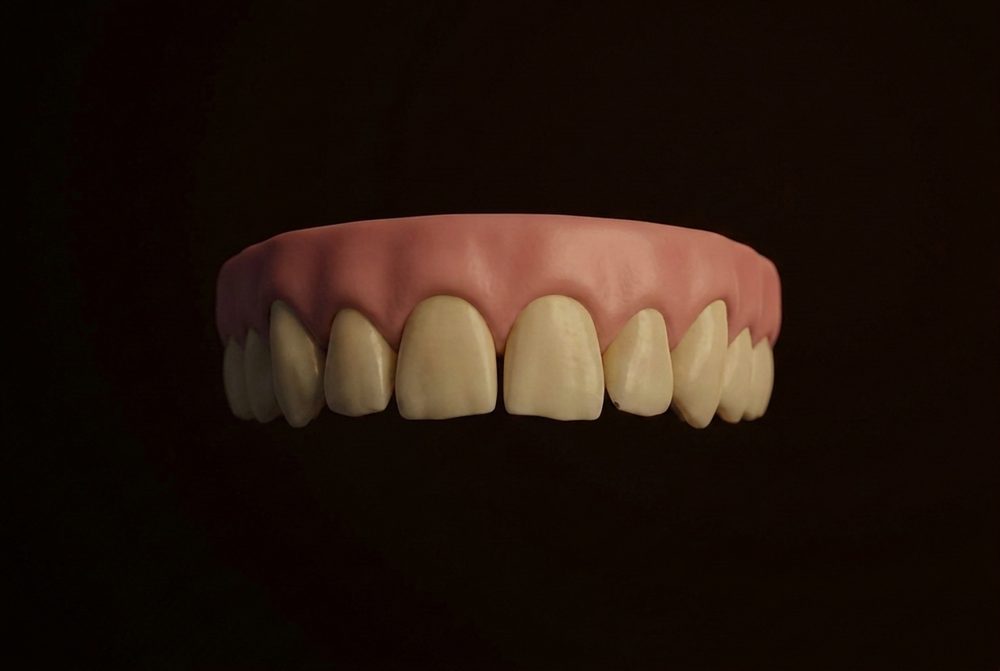
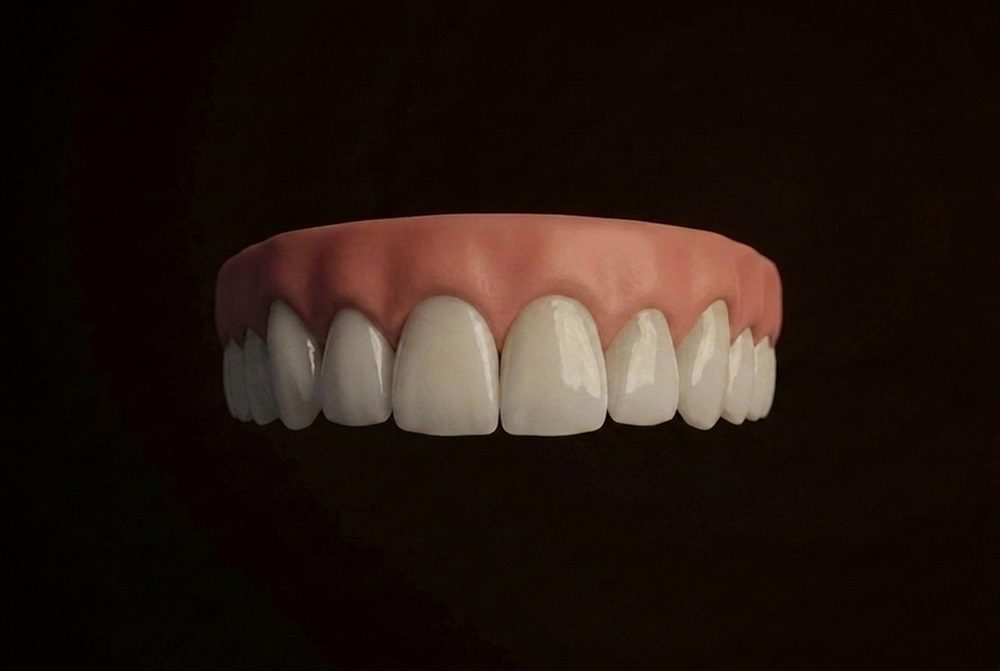
A conceptual before-and-after — the direction of the change, drawn clearly, without pretending to be a photograph of a result no one can guarantee.
The part you can't see
Every graphic the AI is allowed to name is checked, by a script, against the real files on disk — in all four places the software might call it. The model can never reference an image that doesn't exist, so a patient never sees a broken or wrong picture. Accuracy isn't a promise here; it's enforced.